
Why Carrier-Agnostic Infrastructure Matters
Most parcel lockers are built for one carrier. They carry that carrier’s branding, run on that carrier’s software, and accept that carrier’s parcels. The locker is an extension of the carrier’s network, not a piece of shared infrastructure.
That model made sense when one operator dominated last-mile delivery in a given market. It makes less sense now.
The problem with carrier-specific infrastructure
When a locker only works for one carrier, utilisation is capped by that carrier’s parcel volumes at that location. A locker that sits half-empty because the wrong carrier brought the parcel is a locker that is not doing its job. For the operator running the network, that is a cost problem. For the retailer or property owner hosting the locker, it is a service problem.
Carrier-specific infrastructure also creates fragmentation. A retailer that wants to offer parcel pick-up to its customers cannot do so for all carriers from a single locker. They end up with multiple lockers from multiple vendors, each taking up space, each requiring separate maintenance, each running on separate software.
What carrier-agnostic means in practice
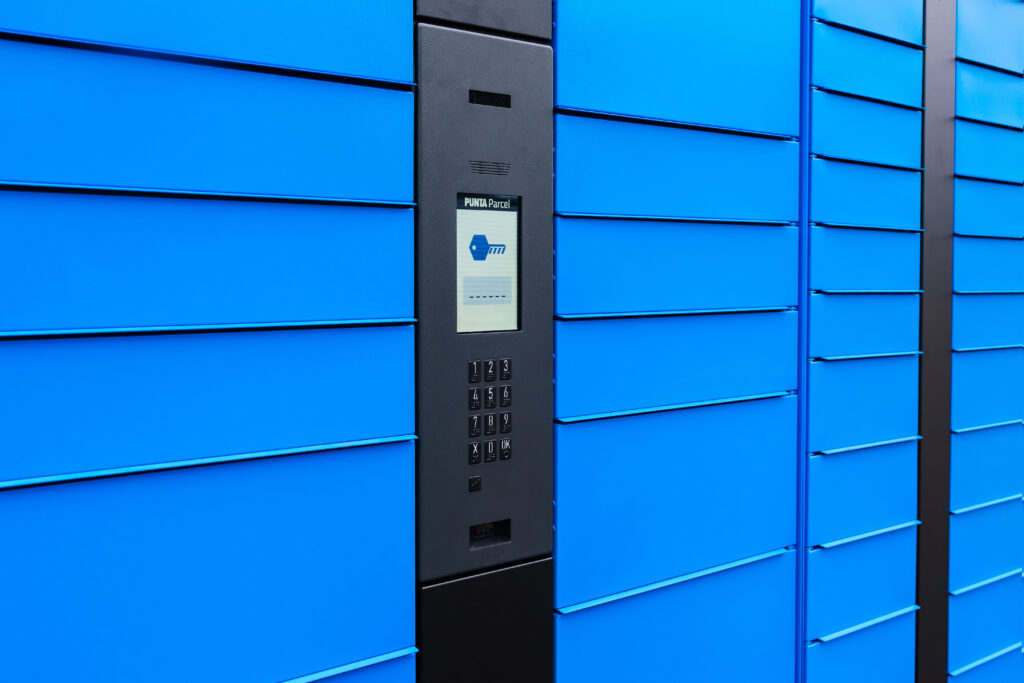
A carrier-agnostic locker accepts parcels from any carrier. Each carrier integrates with the locker management system via API, and each carrier’s couriers and customers access only their own parcels. Compartment allocation between carriers is configurable, so the locker operator decides how capacity is distributed.
From the outside, the locker looks the same to every user. From the inside, it is running separate, secure workflows for each carrier simultaneously.
Why it matters at network scale
When you are running thousands of locker locations, the difference between carrier-specific and carrier-agnostic infrastructure compounds quickly. Higher utilisation per location means lower cost per parcel across the network. Fewer hardware installations per site means lower deployment costs and simpler maintenance. One software platform managing all carriers means no integration sprawl.
Punta has been delivering APM technology since 2016 and now also carrier agnostic solutions. The infrastructure is built to handle multiple carriers per location as a standard capability, not an add-on.
Get in touch
If you want to discuss what that looks like for your network, reach out to Anssi.
Anssi Suominen
CCO, Punta Oy
anssi.suominen@punta.fi