
Reverse logistics: When the last mile becomes the first mile
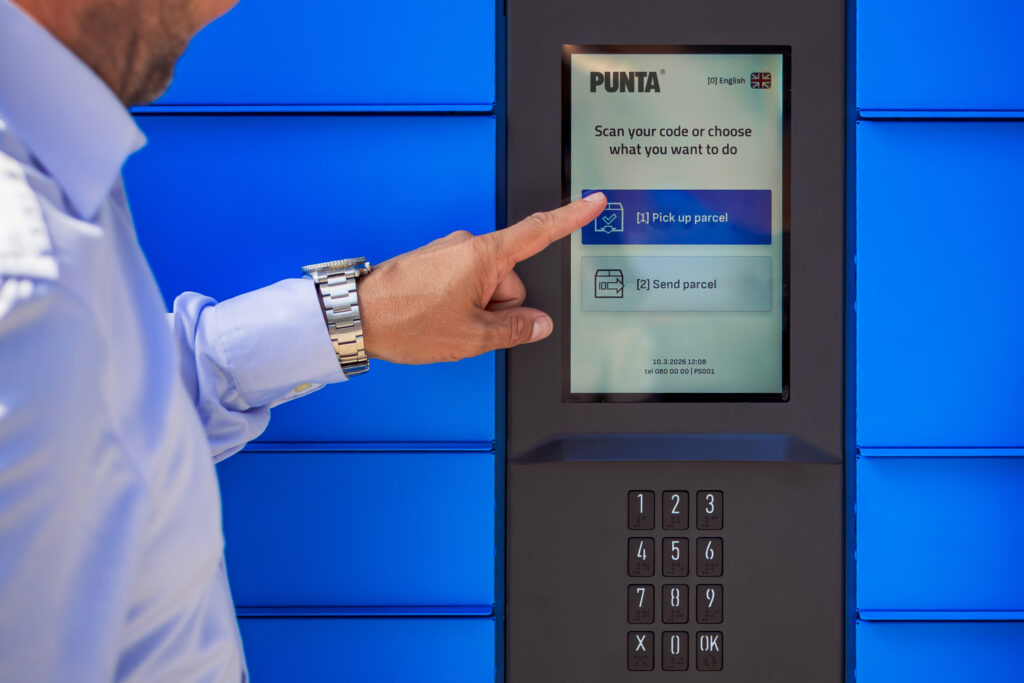
Returns get treated like an afterthought in most delivery infrastructures. Networks get built for the forward flow, parcel out, and returns get bolted on as an inconvenience to be tolerated. That’s backwards. A growing share of parcel volume moves in reverse, some of it retail returns, some of it consumer-to-consumer (C2C) shipping. The operators who treat that reverse flow as a core design requirement instead of a workaround are the ones who’ll actually control the cost of it.
Punta’s lockers weren’t designed as one-way infrastructure. The same unit that hands a parcel out is built to take one back in.
One network, two directions
A locker built only for outbound delivery is half a solution. Punta’s system handles delivery and return through the same interface: a customer can pick up an order and drop off a return at the same locker.
Not every item moving backward through the network is a return. C2C shipping, driven by resale platforms and peer-to-peer marketplaces, runs on the same infrastructure without a carrier handling either end of the exchange. A seller drops an item into a locker, a buyer picks it up, and the two never need to meet directly. The hardware doesn’t distinguish between a postal return and a private sale. The same access flow and the same API apply either way.
That matters more than it sounds. Every return that has to go through a staffed counter or a separate drop-off point adds cost and friction that a locker network was supposed to remove in the first place. Folding returns into the same infrastructure as delivery means the investment does double duty.
Built for access, not just storage
Reverse logistics lives or dies on how easy it is for a customer to actually initiate a return. Punta’s lockers run on a touchscreen and QR code reader, with a flexible API that connects into a carrier’s or postal operator’s existing backend to handle returns and last-mile consolidation as part of one workflow. A customer scans a code, the correct compartment opens, the item goes in, and the system updates in real time.
More return points, open around the clock
Staffed drop-off points are limited by opening hours and by how many locations a postal operator can realistically staff. A locker network isn’t. Off-grid units deploy in under 15 minutes without power or data cabling, so return points can go up in more places than a staffed counter ever could, and every one of them stays open 24/7. A customer isn’t stuck waiting for a service desk to open; the network is simply there whenever they are.
This is also where modularity earns its place. A location handling a lot of returns can scale up with Extension Units the same way it would for outbound demand, adding capacity without new hardware or a new control layer. As resale and peer-to-peer volumes keep growing, that’s capacity a network already has, not capacity it has to be rebuilt to get.
Why this is a design decision, not an add-on
Reverse logistics has stopped being a support function. It’s a factor customers weigh before they buy, and a cost line operators can no longer treat as a rounding error. Infrastructure that only moves goods forward is solving half the problem it was built for.
Punta’s lockers were built to run both directions from day one, because a network that can’t take goods back in isn’t really a last-mile network.
Get in touch
If you want to discuss what handling both directions of the last mile looks like in practice, reach out to Anssi.
Anssi Suominen
CCO, Punta Oy
anssi.suominen@punta.fi