
The gas cylinder vending machine that needs no cables to run
For LPG marketers, the barrier to self-service cylinder retail is not only the machine. It is putting one on the ground.
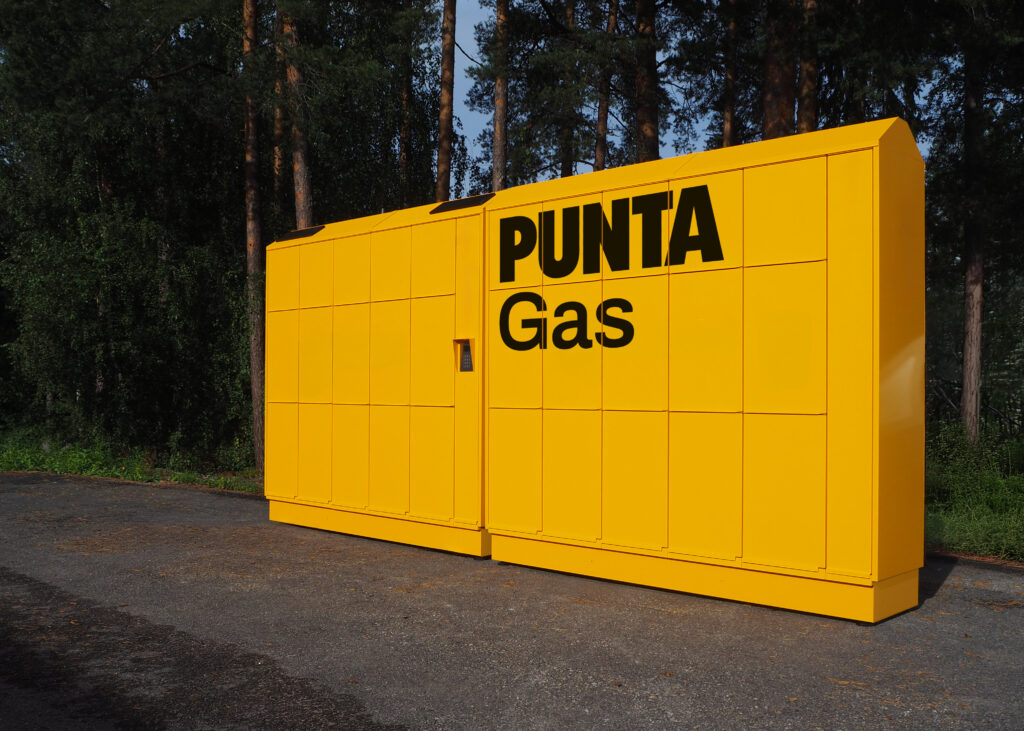
A connected retail point usually needs an electrical supply, groundwork, and a data connection before it sells a single cylinder. That work is what caps a rollout at tens of locations instead of hundreds.
What “no cables” means
Punta Gas needs no electrical connection and no fixed data cabling. It runs on battery and solar, and it connects over the mobile network. The machine still has a live connection for stock and operations. That connection is wireless, not a cable in the ground.
Without cabling, the civil works disappear: no trenching, no electrical hook-up, no data line, and fewer permits. A unit is installed and running in about 15 minutes. The site does not have to be prepared in advance.
Why this is a cost argument
Off-grid is not only about reaching remote places. That part is real: a unit can stand where there is no power or data line. But the bigger point is cost. Removing civil works lowers the total cost of ownership at every location, whether it stands at a busy forecourt or a village on the edge of the grid. Reach is the smaller benefit. Cost per location is what makes a large rollout add up.
The unit carries an RC2 security rating and runs from minus 30 to plus 50 degrees Celsius, so the same machine works across very different locations.
Get in touch
If you are weighing up self-service cylinder retail, the cost per location is the number to start with. Read more about Gas Cylinder Retail, or talk to our team.
Anssi Suominen
CCO, Punta Oy
anssi.suominen@punta.fi