What Ten Years of Operation Has Taught Us
Running an APM network is not a product launch. It is an infrastructure commitment that plays out over years, across hundreds of locations, in every weather condition imaginable. Since 2016, we have been doing exactly that. Here is what a decade of live network operation has taught us.
Flexibility is what determines where and how fast you can grow
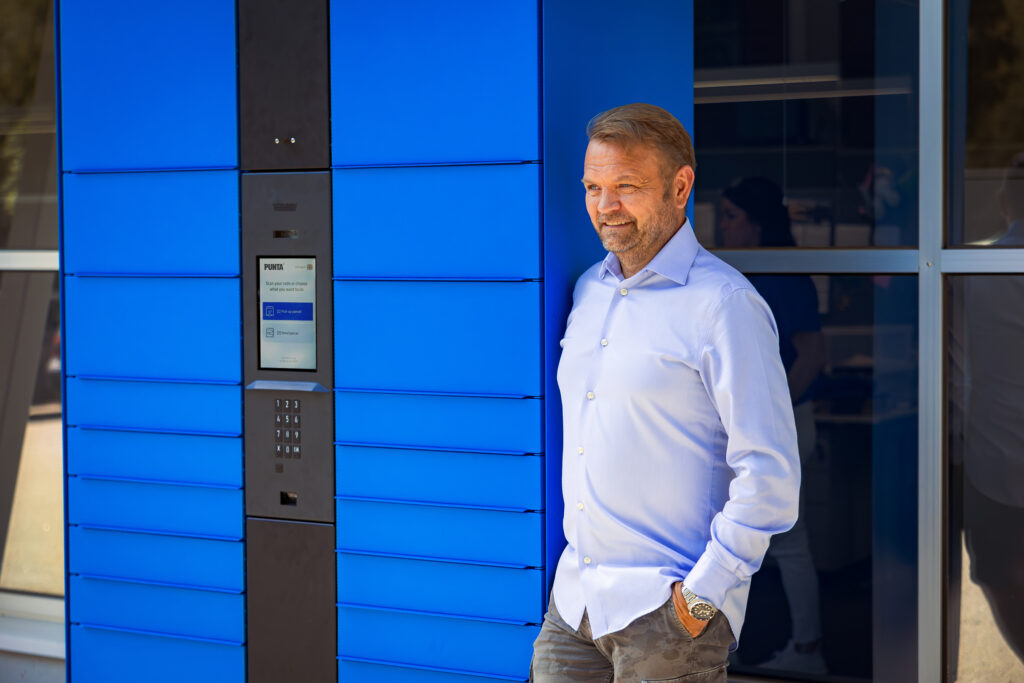
Demand is rarely evenly distributed. Some locations need high-capacity units, others need a footprint that fits a small retail forecourt. Whether the need is for indoor or outdoor APM, Punta can provide the same UI and user experience, including 10” touch screen, keypad and scanner. Modular hardware, where central and extension units can be mixed and matched per location, lets operators respond to that reality without overbuilding. Off-grid units with battery and solar panels take it further: no grid connection required, no civil works, no trenching. Locations that were previously unviable become straightforward. Growth no longer waits on infrastructure.
Reliability is not something you put on a data sheet. It is something you earn over time.
Any vendor can publish an uptime figure. What sits behind that figure is what matters: how the hardware performs through a Scandinavian winter, how the software handles edge cases at scale, how quickly field issues get resolved when something goes wrong at 2am. Running 6,000+ units across Finland and the Baltics for ten years, indoors and outdoors, through every season, builds a depth of operational knowledge that cannot be manufactured in a product brochure.
Total cost of ownership is the result of decisions made before the unit goes live
Connectivity costs, software licensing, field maintenance, location preparation, integration fees: these all compound across a network’s lifetime. Carrier-agnostic infrastructure keeps utilisation high and cost per parcel low. Off-grid deployment removes civil works costs entirely. Owning the hardware, software, and firmware end-to-end means no third-party licensing and no integration bills sitting between systems. TCO does not manage itself. It is the result of deliberate design choices made from the start.
The fundamentals have not changed but the scale has
Reliable hardware, flexible software, the ability to deploy wherever parcels need to go. These were the requirements in 2016 and they are the requirements now. What is different is the volume, the network density, and the expectations of operators who have moved from pilot to full roll-out. Punta has been building for that scale from the beginning.
Over 500 million parcels delivered. Over 6,000 units running. Ten years of operational data informing every decision we make.
Get in touch
If you want to discuss what that experience looks like in practice, reach out to Anssi.
Anssi Suominen
CCO, Punta Oy
anssi.suominen@punta.fi